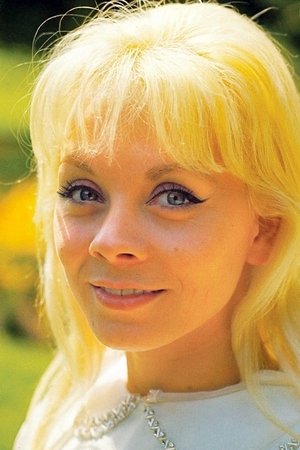
Isabelle Aubret
Born: 1938-07-27 in Lille, Nord, France
Known For: Acting
Biography
Isabelle Aubret (born Thérèse Coquerelle; 27 July 1938) is a French singer best known for winning the Eurovision Song Contest in 1962 with the song "Un premier amour". Thérèse Coquerelle was born in Lille, France, on 27 July 1938. She was the fifth of eleven children; her father was a foreman in a spinning mill, while her mother, of Ukrainian origin, was a housewife. Coquerelle trained in gymnastics as a child, and in 1952 she won the national French Gymnastics Championship. That same year, she left school and was hired as a winder in the Lemaire-Destombes factory in Saint-André, where her father worked. A few years later, she returned to this spinning mill to sing in the theatre of her family house, as part of a radio program. She continued to take drama and classical dance classes. At the same time, she participated in local singing competitions. Her drama teacher introduced her to the director of a Lille radio station, and Coquerelle took the stage for the first time. She sang in ensembles, and in 1956, at the age of eighteen, she joined an orchestra in Le Havre. In 1960 she won a singing competition at the Olympia, where she was noticed by the director of the room, Bruno Coquatrix. After Coquerelle secured a cabaret spot in Pigalle, she released her debut single "Nous les Amoureux" in 1961 under the name Isabelle Aubret. Aubret won the Eurovision Song Contest in 1962, representing France and singing "Un premier amour" ("A first love") with music composed by Claude-Henri Vic and lyrics by Roland Stéphane Valade. In 1963, she was approached by director Jacques Demy and musician Michel Legrand for the main role of the film Les parapluies de Cherbourg, but Aubret was subsequently injured in a car accident when her car skidded on a bend. One person died and three were seriously injured, including pianist Serge Sentis. Aubret was hospitalized in Autun, going through multiple operations and a long rehabilitation. In 1968, she returned to Eurovision and again represented France, this time singing "La source" ("The Spring/Fountain") with music by Daniel Faure and lyrics by Henri Dijan and Guy Bonnet. Aubret was a participant in the French national heats for Eurovision in other years. Her first attempt was in 1961 with the song "Le gars de n'importe où". She was awarded second place. Another runner-up spot came Aubret's way in 1970 when she teamed up with Daniel Beretta for the song "Olivier, Olivia". She was not as successful with her 1976 effort, "Je te connais déjà", which finished sixth out of seven songs in the second semi-final. Her final challenge for Eurovision came in 1983 with the patriotic "France, France", which took her to third place. ... Working with French composer Michel Colombier, Aubret co-produced the song "C'est Ainsi Que Les Choses Arrivent" for Jean-Pierre Melville's 1972 film Un Flic. In 1981, Aubret had another accident. She was rehearsing a flying trapeze number for the Union of Artists Gala with her partner, boxer Jean-Claude Bouttier, when she fell and broke both legs. It took two years of rehabilitation for her to walk again. In 2001, she celebrated her forty-year career by giving a series of concerts at Bobino. Source: Article "Isabelle Aubret" from Wikipedia in English, licensed under CC-BY-SA.
Filmography
2022
- Le Siècle des couturières as Self
2020
2019
- När Franco stal Eurovision as Self
1998
- Vivement dimanche as Self
1990
- Stars 90 as Self
1987
- Sacrée soirée as Self
- Le monde est à vous as Self
- Matin Bonheur as Self
1984
- La Chance aux chansons as Self
1982
- Champs-Elysées as Self
1976
- Les Jeux de 20 heures as Self
1975
- Midi Première as Self
- Les Rendez-vous du dimanche as Self
1972
- Le Grand Échiquier as Self
- Midi trente as Self
1971
- Samedi soir as Self
1966
- Continental Showcase as Self
1962
- Lieben Sie Show ? as Self
1959
- Discorama as Self
1956
- Eurovision Song Contest as Self - Contestant