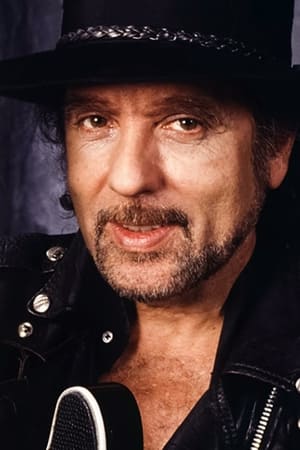
Danyel Gérard
Born: 1939-03-07 in Paris, France
Known For: Acting
Biography
Danyel Gérard (born Gérard Daniel Kherlakian; 7 March 1939) is a French pop singer and composer. Gérard was born in Paris, France to an Armenian father and an Corsican mother, but grew up mainly in Rio de Janeiro, in Brazil. In 1953, he returned to Paris and became a choir boy at Notre Dame. Following this he played in the rock and roll band The Dangers. In 1958 he made his first recordings: "Viens" (a cover of the Kalin Twins' hit "When") and "D'où reviens-tu Billy Boy" (adapted from Dorothy Collins' "Where Have You Been, Billy Boy"), making one of the first young French singers to successfully sing rock and roll (his only rivals at this stage were Richard Anthony, Claude Piron (later better known as Danny Boy) and Gabriel Dalar), although his commercial impact was very limited; despite a latter-day, revisionist recasting of him as the French Elvis Presley, he was nevertheless one of France's first rock stars. After cutting a further EP featuring a cover of Don Gibson's "Oh Lonesome Me" ("O pauvre moi") which was buried by a rival version by Sacha Distel and an adaptation of the Fraternity Brothers' "Passion Flower" ("Tout l'amour"), he was drafted and spent from 1959 to 1961 he was a soldier in North Africa. Subsequently, he was a singer and guitarist in various bistros. On his return, he resumed his singing career with the minor 1961 hit "Oh Marie-Line" but by then he had been overtaken by newer singers such as Johnny Hallyday. He also began to write songs, penning tunes for Johnny Hallyday, Sylvie Vartan, Dalida, Richard Anthony, German-based star Caterina Valente, actress Marie Laforêt and Austrian singer Udo Jürgens. After enjoying a major hit with the French version of Pat Boone's "Speedy Gonzales" ("Le petit Gonzalès"), despite competition from a version by Dalida, in 1963 he became to the first signing to the new Disc AZ label, issuing two further EPs for them before unleashing his best recording of the period, a revival of Chuck Berry's "Memphis, Tennessee". Further hits followed but by the mid-sixties his star had waned and he moved into record production, most notably for Michel Corringe. He returned in 1970 with the French hit "Même un clown" but his international breakthrough came in 1971 with "Butterfly", which he recorded in several languages and which has sold seven million copies. It charted across Europe, reaching #1 in Germany, Switzerland, Sweden, and France, #5 in the Netherlands, and #10 in the UK; in the US it peaked at #78. It was awarded a gold disc by the Recording Industry Association of America. It has since become a pop standard, and was also used in the film The Mad Aunts Strike Out. ... Source: Article "Danyel Gérard" from Wikipedia in English, licensed under CC-BY-SA 3.0.
Filmography
2003
- Die ultimative Chartshow as Self
1998
- Vivement dimanche as Self
1995
- Immer wieder sonntags as Self
1987
- Sacrée soirée as Self
- Le monde est à vous as Self
1986
- ZDF-Fernsehgarten as Self
1984
- La Chance aux chansons as Self
1982
- Champs-Elysées as Self
1976
- 30 millions d'amis as Self
1975
- Midi Première as Self
- Les Rendez-vous du dimanche as Self
- Système 2 as Self
1972
- Le Grand Échiquier as Self
- Midi trente as Self
- Ein Kessel Buntes as Self - Musician
1971
- Disco as Self
- Baden-Badener Roulette as Self
- Mary’s Music as Self
- Die tollen Tanten schlagen zu as Sänger
1969
- Die ZDF-Hitparade as Self
- Unsere kleine Show - Musik zur blauen Stunde as Self
1968
- Starparade as Self
1967
- The Ponies as Danyel Gérard
1964
- Die Drehscheibe as Self
- In the Affirmative ... (Original Music Composer)
1963
- L'inconnue de Hong Kong ... (Original Music Composer)
1959
- Discorama as Self
- The Night of the Hunted as Rico